Every real estate investor in your market is running the same ads.
“We Buy Houses Fast. Cash Offers. Any Condition.”
The messaging is identical. The landing pages look the same. The sellers can’t tell one investor from another.
Then someone discovers your video. They see your face, hear your voice, and understand your story. They watch you explain how you helped someone in their exact situation. In three minutes, you’ve built more trust than your competitors will build in three weeks of back-and-forth texts.
Video marketing isn’t just another channel. It’s your opportunity to differentiate yourself in a crowded market. While other investors hide behind generic websites and templated ads, video lets you showcase your personality, demonstrate your expertise, and build emotional connections before ever speaking to a seller.
The investors who embrace video marketing now are building unfair advantages. They’re closing deals faster, commanding higher trust, and generating referrals at rates that text-only competitors can’t match. This guide shows you exactly how to use video marketing to attract motivated sellers and stand out from every other “we buy houses” investor in your area.
Key Takeaways
- Video content builds trust faster than any other medium, allowing sellers to “meet” you before the first conversation
- Short-form vertical videos on platforms like Instagram, Facebook, and TikTok reach motivated sellers where they already spend time
- YouTube ads target sellers actively searching for solutions, capturing high-intent traffic at lower costs than Google search ads
- Testimonial videos from past sellers overcome objections and build credibility more effectively than written reviews
- A simple smartphone setup and basic editing skills are enough to start (professional production isn’t required for effective video marketing)
- Why Video Works for Motivated Seller Marketing
- Types of Videos That Attract Motivated Sellers
- Short-Form Video Strategy
- YouTube Advertising Strategy
- Integrating Video into Your Overall Marketing
- Equipment and Production
- Common Video Marketing Mistakes
- Getting Started with Video Marketing
- Measuring Video Marketing ROI
- Conclusion
Why Video Works for Motivated Seller Marketing
Video fundamentally changes how sellers perceive and trust you.
Building Trust Before the First Call
When sellers watch your videos, they form impressions about your character, competence, and authenticity. They decide whether you’re someone they want to work with before ever picking up the phone.
What video communicates that text cannot:
- Body language and facial expressions show authenticity
- Tone of voice conveys empathy and understanding
- Energy and personality differentiate you from competitors
- Demonstrate confidence and expertise through explainer videos
- Local presence through recognizable backgrounds and references
A seller who’s watched three of your videos before calling is pre-sold in a way that no amount of written content can achieve. They’ve already decided to work with you so, the conversation will be about details, not whether you’re trustworthy.
Standing Out in a Crowded Market
Every market has dozens of investors competing for the same motivated sellers. Most use identical marketing approaches. Video gives you a way to be different.
Consider this: a seller receives five postcards saying “We Buy Houses Fast.” They’re all the same. But if one of those investors has a video showing their face, explaining their process, and demonstrating past results, who do you think the seller calls first?

Video creates differentiation that’s hard to copy. Your competitors can replicate your website design or copy your ad text. They can’t replicate your personality, your story, your presence.
Higher Engagement Across All Platforms
Video content simply performs better than text or images across every platform where you market.
Video performance advantages:
- Emails with video in the subject line increase open rates by 19%
- Landing pages with video convert 86% better than those without
- Social media algorithms prioritize video content in feeds
- People retain 95% of a message when watching a video vs. 10% when reading text
This isn’t about following trends. It’s about using the medium that works best for communicating with motivated sellers.
Types of Videos That Attract Motivated Sellers
Different video types serve different purposes in your marketing funnel. Build a library that addresses various stages of the seller journey.
Personal Introduction Videos
Your personal introduction establishes who you are and why sellers should trust you. This video belongs on your homepage, About page, and in initial email sequences.
Elements of effective introduction videos:
- Who you are and why you’re in this business
- How long you’ve been buying properties in the area
- What makes your approach different
- Types of situations you specialize in
- Your commitment to fair, honest transactions
Keep it conversational and authentic. Don’t read from a script. Speak directly to the camera as if you’re talking to a friend. Two to three minutes is ideal.

Educational Content Videos
Educational videos position you as an expert while helping sellers understand their options. These work well for social media, blog posts, and YouTube organic content.
Valuable educational topics:
- How investor purchases differ from traditional sales
- What to expect during property evaluation
- Understanding as-is sales and repair costs
- Timeline comparison: investor vs. agent vs. FSBO
- How to handle inherited property
- Options for avoiding foreclosure
- Tax implications of different selling methods
Create a library of 20-30 educational videos covering every question sellers commonly ask. When someone emails a question, you can respond with a personalized message and a relevant video link.
Testimonial and Case Study Videos
Nothing builds credibility like real sellers explaining how you helped them. Testimonial videos overcome skepticism and objections better than any marketing message you could create.
Effective testimonial video elements:
- Seller describing their initial situation and concerns
- What made them choose you over other options
- Their experience working with you
- The outcome and how it solved their problem
- Whether they’d recommend you to others
Always ask for video testimonials at closing. Offer to record them on your phone if sellers don’t want to do it themselves. Even simple smartphone testimonials outperform written reviews.
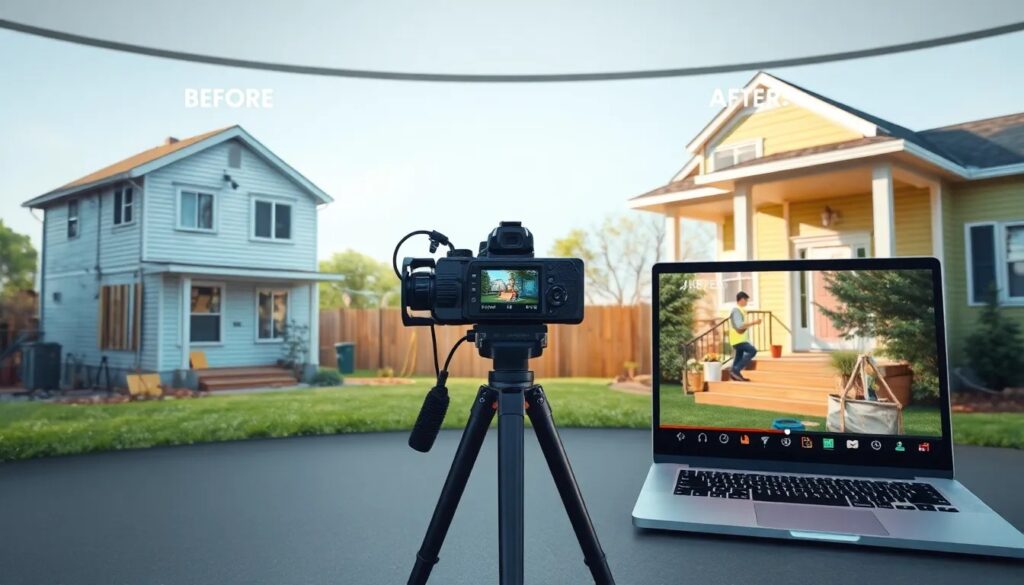
Film case study videos showing before/after transformations of properties you’ve purchased. Walk through the property, explain the situation, describe your solution, and show the results. These are tangible proof of your capabilities.
Process Explanation Videos
Sellers considering working with an investor often don’t understand how the process works. Confusion creates hesitation. Process videos help remove uncertainty.
Process videos to create:
- Step-by-step walkthrough of your buying process
- What happens during property evaluation
- How offers are calculated
- What sellers need to do (and don’t need to do)
- Timeline from offer to closing
- How you handle various complications (liens, code violations, etc.)
Break complex processes into short, focused videos rather than one long explanation. Someone concerned about liens can watch that specific video without sitting through your entire process.
Property Tour Videos
If you flip or wholesale properties, document your projects on video. Show the property as purchased, the renovation process, and the final result. This content serves multiple purposes.
Benefits of property tour content:
- Demonstrates your experience and capability
- Shows you actually close deals (not just marketing)
- Provides engaging content for social media
- Creates before/after comparisons that attract sellers
- Builds your reputation in the local market
These videos also work well for YouTube SEO. Searches like “house flip [your city]” or “property renovation [neighborhood]” can drive local traffic.
Short-Form Video Strategy
Short-form vertical video has exploded across Instagram Reels, Facebook Reels, TikTok, and YouTube Shorts. This format is ideal for reaching motivated sellers scrolling through social media.
1. Platform Selection and Strategy
Each short-form platform has different demographics and content styles. Choose based on where your target sellers spend time.
Instagram and Facebook Reels:
- Broad demographic reach, especially 25-54 age range
- Strong for local community building
- Easy cross-posting between platforms
- Good for mixing educational and personality content
TikTok:
- Younger demographic but growing older
- Highly viral potential
- More casual, behind-the-scenes content performs well
- Excellent for brand awareness in new markets
YouTube Shorts:
- Pulls from a broader YouTube audience
- Better for educational/how-to content
- Can drive subscribers to long-form channel
- Strong search and recommendation algorithm
You don’t need to be on every platform. Start with one, master it, then expand. Facebook and Instagram Reels offer the easiest starting point for most real estate investors.
2. Content Ideas for Short-Form Videos
Short-form video requires quick hooks, fast pacing, and immediate value. You have 3-5 seconds to grab attention before viewers scroll past.
Educational Quick Tips:
- “3 things to do before selling an inherited property”
- “The #1 mistake sellers make when pricing their house”
- “How to avoid foreclosure without bankruptcy”
Behind-the-Scenes:
- Property walkthrough showing condition issues
- Day-in-the-life of a property investor
- Team meeting discussing new acquisition
Before/After Transformations:
- Quick cuts showing property transformation
- Time-lapse of renovation work
- Side-by-side comparison clips
Myth-Busting:
- “You don’t need to repair anything when selling to investors”
- “Here’s what investors really look for in properties”
- “The truth about cash offers vs. financed offers”
Personal Story/Motivation:
- Why you got into real estate investing
- Your first deal story
- Seller success stories that impacted you
Local Market Updates:
- Quick stats about your market
- Neighborhood-specific insights
- Seasonal selling trends
3. Creating Effective Short-Form Videos
You don’t need expensive equipment or professional editing. Smartphone cameras and simple editing apps are sufficient.
Production tips for short-form content:
- Film vertically (9:16 aspect ratio) always
- Use natural lighting or ring light
- Clear audio matters more than perfect video
- Start with a hook in the first 3 seconds
- Add captions (80% watch without sound)
- Keep videos under 60 seconds when possible
- Use trending audio when appropriate
Editing apps to consider:
- CapCut (free, powerful, user-friendly)
- InShot (simple, quick edits)
- Adobe Premiere Rush (more advanced)
- Platform native editors (Instagram, TikTok built-in)
4. Hashtag and Caption Strategy
Discoverability on short-form platforms depends heavily on hashtags, keywords, and captions.
Hashtag approach:
- Mix of broad, medium, and specific hashtags
- Location-based tags (#DallasRealEstate)
- Situation-specific tags (#InheritedProperty, #AvoidForeclosure)
- Industry tags (#RealEstateInvestor, #WeBuyHouses)
- 5-10 relevant hashtags per post
Caption best practices:
- Lead with value or intrigue in the first line
- Include call-to-action (comment, share, DM)
- Ask questions to drive engagement
- Use emojis strategically for readability
- Include link in bio reminder when relevant
5. Posting Frequency and Timing
Consistency matters more than perfection on short-form platforms. Algorithms favor accounts that post regularly.
Recommended posting frequency:
- Minimum 3-4 times per week
- Daily posting is ideal for growth
- Batch create content to maintain consistency
- Test different posting times for your audience
Most social media management tools allow scheduling short-form content in advance, making daily posting manageable even with a busy schedule.
YouTube Advertising Strategy
While organic short-form content builds brand awareness, YouTube ads capture high-intent sellers actively searching for solutions. This is where you convert attention into leads.
Why YouTube Ads Work for Motivated Sellers
YouTube is the second-largest search engine. People searching “how to sell inherited property” or “avoid foreclosure options” are actively looking for solutions. Your ads can appear directly in those search results and related videos.
YouTube ads advantages:
- Lower cost per click than Google search ads
- High-intent traffic (people researching solutions)
- Video format builds trust before click
- Targeting options beyond just keywords
- In-market audience segments for property sellers
YouTube ads also appear before videos on topics your sellers care about – personal finance, legal issues, home improvement, and related content.
Types of YouTube Ads
YouTube offers several ad formats. Choose based on your goals and budget.
Skippable In-Stream Ads:
- Play before, during, or after videos
- Viewers can skip after 5 seconds
- You pay only if they watch 30 seconds or click
- Best for: Brand awareness and consideration
Non-Skippable In-Stream Ads:
- 15-20 seconds long
- Cannot be skipped
- Pay per impression
- Best for: Short, compelling messages to captivate audience
Discovery Ads:
- Appear in YouTube search results
- Show thumbnail and headline
- Pay only when clicked
- Best for: Capturing high-intent searches
Bumper Ads:
- 6 seconds maximum
- Non-skippable
- Pay per impression
- Best for: Brand reinforcement and frequency
For most real estate investors, skippable in-stream ads and discovery ads provide the best ROI. They capture intent without wasting budget on disinterested viewers.
Creating High-Converting YouTube Ads
Your YouTube ad has one job: get the viewer to click through to your landing page. Every element should drive toward that goal.
Effective YouTube ad structure:
First 5 Seconds (The Hook):
- Identify the viewer’s problem immediately
- “Inherited a property you don’t want?”
- “Behind on mortgage and afraid of foreclosure?”
- “Tired landlord ready to exit rental property?”
Seconds 5-30 (The Value):
- Explain how you solve their problem
- Differentiate from other options
- Build credibility quickly
- Include social proof if possible
Seconds 30-60 (The Call-to-Action):
- Clear next step (click to get offer, schedule call, etc.)
- Urgency or benefit of acting now
- URL displayed on screen
- Strong closing statement
Ad production tips:
- Speak directly to the camera
- Good lighting and clear audio are essential
- Remove distracting background elements
- Include your website URL as text overlay
- Add captions for silent viewing
- Professional appearance but authentic delivery
Targeting the Right Audience
YouTube’s targeting options let you reach motivated sellers at scale. Layer multiple targeting criteria for best results.
Keyword Targeting:
- “sell house fast”
- “inherited property what to do”
- “avoid foreclosure”
- “sell rental property”
- “we buy houses”
- Location-specific terms
Topic Targeting:
- Real estate
- Personal finance
- Legal issues
- Home improvement
- Estate planning
Placement Targeting:
- Specific channels about real estate
- Financial advice channels
- Legal advice channels
- Local news channels
Demographic Targeting:
- Age ranges likely to inherit (45-65+)
- Homeownership status
- Income brackets
- Parental status (for downsizing)
Custom Intent Audiences:
- People who searched specific terms on Google
- Visited websites related to home selling
- Engaged with real estate content
Start with broader targeting to gather data, then narrow based on what converts. YouTube’s algorithm learns from your conversions and optimizes delivery over time.
Budgeting and Bidding Strategy
YouTube ads can work with almost any budget. Start small, prove ROI, then scale.
Budget recommendations:
- Test budget: $20-50 per day minimum
- Proven campaign: $100+ per day
- Aggressive growth: $500+ per day
Bidding strategies:
- Maximum CPV (cost per view): Start at $0.10-0.30
- Target CPA (cost per acquisition): Once you have conversion data
- Maximize conversions: Let the algorithm optimize for leads
Track cost per lead and cost per closed deal, not just cost per view. A higher CPV that generates better leads may have better ROI than cheap views from unqualified traffic.
Measuring YouTube Ad Performance
YouTube ads provide detailed analytics. Monitor these metrics to optimize performance.
Key metrics to track:
- View rate (percentage who watch vs. skip)
- Average view duration
- Click-through rate to landing page
- Cost per view
- Cost per click
- Landing page conversion rate
- Cost per lead
- Lead-to-deal conversion rate
If view rates are low (under 15%), your hook isn’t compelling. If clicks are low, your call-to-action needs work. If landing page conversions are low, the message disconnect exists between the ad and the landing page.
Integrating Video into Your Overall Marketing
Video shouldn’t exist in isolation. Integrate it across all your marketing channels for maximum impact.
Video on Your Website
Every page of your website can benefit from video content. Visitors engage longer and convert better when video is present.
Strategic video placement:
- Homepage hero: Personal introduction or value proposition
- About page: Your story and why you’re different
- How It Works page: Process explanation video
- FAQ page: Video answers to common questions
- Landing pages: Testimonials or case studies
- Blog posts: Relevant educational videos
Having a website platform that makes embedding and managing video content simple ensures you actually use video throughout your site rather than just on the homepage. When you can customize pages and add video as easily as text, you’re more likely to maximize video’s impact.
Video in Email Marketing
Emails with video see dramatically higher open rates and click-through rates. Even just the word “video” in subject lines improves opens.
Effective email video strategies:
- Welcome sequence: Personal introduction video
- Nurture campaigns: Educational videos addressing objections
- Follow-up emails: Video responses to specific questions
- Monthly newsletters: Market updates or property tours
- Re-engagement campaigns: Personal video reaching out
Don’t embed the actual video in email (many clients block this). Use a video thumbnail image that links to the video on your website or YouTube.
Video in SMS Marketing
Text messages have character limits, but you can include video links that drive engagement.
SMS video approaches:
- “I recorded a quick video explaining your options: [link]”
- “See how we helped someone in your situation: [link]”
- “Watch this 2-minute video about our process: [link]”
Keep the link as short as possible. Use URL shorteners if necessary. The SMS message should create curiosity about the video content.
Video on Social Media Organic Posts
Beyond paid advertising, organic video posts build your brand and audience over time.
Organic social video strategy:
- Share different video types throughout the week
- Repurpose long-form YouTube content into short clips
- Go live occasionally for Q&A sessions
- Share user-generated content (seller testimonials)
- Post behind-the-scenes content regularly
Consistency matters more than production quality. Weekly posting of simple videos outperforms occasional professional productions.
Equipment and Production
You don’t need expensive equipment to create effective marketing videos. Start with what you have and upgrade as you grow.
Minimal Setup (Under $200)
What you need:
- Smartphone (iPhone 11+ or Android equivalent)
- Tripod with phone mount ($20-30)
- Clip-on lavalier microphone ($20-50)
- Ring light ($30-60)
- Free editing app (CapCut, iMovie)
This setup produces quality sufficient for all the video types discussed. Most viewers can’t tell the difference between this and professional gear.
Intermediate Setup ($500-1000)
Upgrades worth considering:
- Better external microphone (Rode VideoMic)
- LED panel lights for better lighting
- DSLR or mirrorless camera
- Basic gimbal for smooth motion
- Paid editing software (Adobe Premiere, Final Cut)
Upgrade when video is consistently generating ROI, and you want to improve production efficiency, not because you think better gear will suddenly make video work.
Recording Best Practices
Equipment matters less than these fundamentals.
Essential recording principles:
- Shoot in landscape for YouTube/website, vertical for Reels/Shorts
- Frame yourself properly (not too close or far)
- Eye-level camera height
- Clean, non-distracting background
- Natural light from a window or quality artificial light
- Test audio levels before recording
- Record multiple takes and choose the best
- Relax and be yourself (authenticity trumps perfection)
Editing for Different Platforms
Each platform has ideal specifications. Optimize your edits accordingly.
Platform requirements:
- YouTube: 1920×1080 (landscape), up to 4K
- Instagram/Facebook Reels: 1080×1920 (vertical), 9:16 ratio
- TikTok: 1080×1920 (vertical), 9:16 ratio
- YouTube Shorts: 1080×1920 (vertical), 9:16 ratio
- Website: 1920×1080 (landscape), MP4 format
You can film once and edit for multiple platforms. Record landscape for YouTube, then crop to vertical for short-form content.
Common Video Marketing Mistakes
Avoid these pitfalls that prevent investors from seeing results with video.
Waiting for Perfect Conditions
Many investors plan to start video marketing “when they have time” or “after they get better equipment.” Months pass. No videos get made. Start with your smartphone today. Imperfect videos beat perfect plans.
Being Too Promotional
Videos that sound like sales pitches get skipped immediately. Focus on helping, educating, and building relationships. The selling happens naturally when trust exists.
Inconsistent Publishing
Creating five videos in one day, then nothing for three months, doesn’t build an audience. Consistent weekly posting outperforms sporadic bursts of activity.
Ignoring Analytics
Post videos without checking which perform well and which don’t. Use data to create more of what works and less of what doesn’t.
Poor Audio Quality
Viewers forgive mediocre video quality but abandon content with bad audio. Invest in a basic external microphone even before upgrading your camera.
No Clear Call-to-Action
Videos that inform but don’t direct viewers to the next steps waste opportunities. Every video should tell viewers what to do next.
Overthinking It
Spending weeks scripting and planning rather than recording. Done is better than perfect in video marketing. Create content, learn from results, improve.
Getting Started with Video Marketing
Create a 30-day video launch plan that builds momentum without overwhelming you.
Week 1: Foundation
- Record personal introduction video
- Write a list of 20 video topic ideas
- Set up equipment and practice recording
- Create accounts on chosen platforms
- Record 2-3 educational videos
Week 2: Launch Organic Content
- Post the first educational video on social media
- Publish the introduction video on your website
- Record an additional 3-4 videos
- Start documenting properties for tour videos
- Engage with comments and questions
Week 3: Expand Platform Presence
- Cross-post content to additional platforms
- Experiment with short-form content
- Record your first testimonial video if possible
- Create 2-3 process explanation videos
- Test different posting times and formats
Week 4: Launch Paid Advertising
- Set up a YouTube Ads account
- Create your first video ad using existing content
- Start with a small test budget ($20-30/day)
- Monitor results and adjust targeting
- Plan next month’s content calendar
Measuring Video Marketing ROI
Track specific metrics to understand what’s working and where to invest more resources.
Metrics that matter:
- Views and completion rates by video type
- Click-through rates from videos to landing pages
- Lead generation attributed to video content
- Cost per lead from paid video ads
- Engagement rates on organic social video
- Time on site for visitors who watch videos
- Conversion rates: video viewers vs. non-viewers
Compare video marketing performance to other channels. If YouTube ads generate leads at $30 each while Google search ads cost $60 per lead, shift budget accordingly.
Conclusion
Video marketing is how you differentiate yourself in a market flooded with identical “we buy houses” messaging. While competitors hide behind text ads and generic websites, video lets you showcase your personality, build trust instantly, and create emotional connections that drive conversions.
Start simple. Use your smartphone, create authentic content, and focus on helping sellers understand their options. Short-form content builds brand awareness with sellers who aren’t actively searching yet. YouTube ads capture high-intent traffic from sellers researching solutions. Together, these create a complete system that generates leads while building long-term brand equity.
The technical barriers are gone. The equipment is affordable. The platforms are accessible. Record your first video today – imperfect action beats perfect planning every time.
Vestor™ systems have generated over $150M for our REI clients since 2015. Whether you need Google or Facebook PPC, a new website, a new or better CRM, or a stronger social media presence, put our lead generation, lead management, and brand-building tools and services to work in your business today.